Monday, February 13, 2012

#7: Lighting

I tend to prefer lighting that is either very natural or highly stylized. I'm not terribly interested in the flat middle ground, I want it to be on one end of the spectrum or the other.

These nature shots by William Neil really work for me since they are both natural and stylized. The shadows cast by the mountains shot at just the right time of day highlight the golden hues along the edge of the ridge, much like a high key portrait of a person.


In this one, Neill uses very high contrast and reflections to achieve an otherworldly look in a completely natural setting.


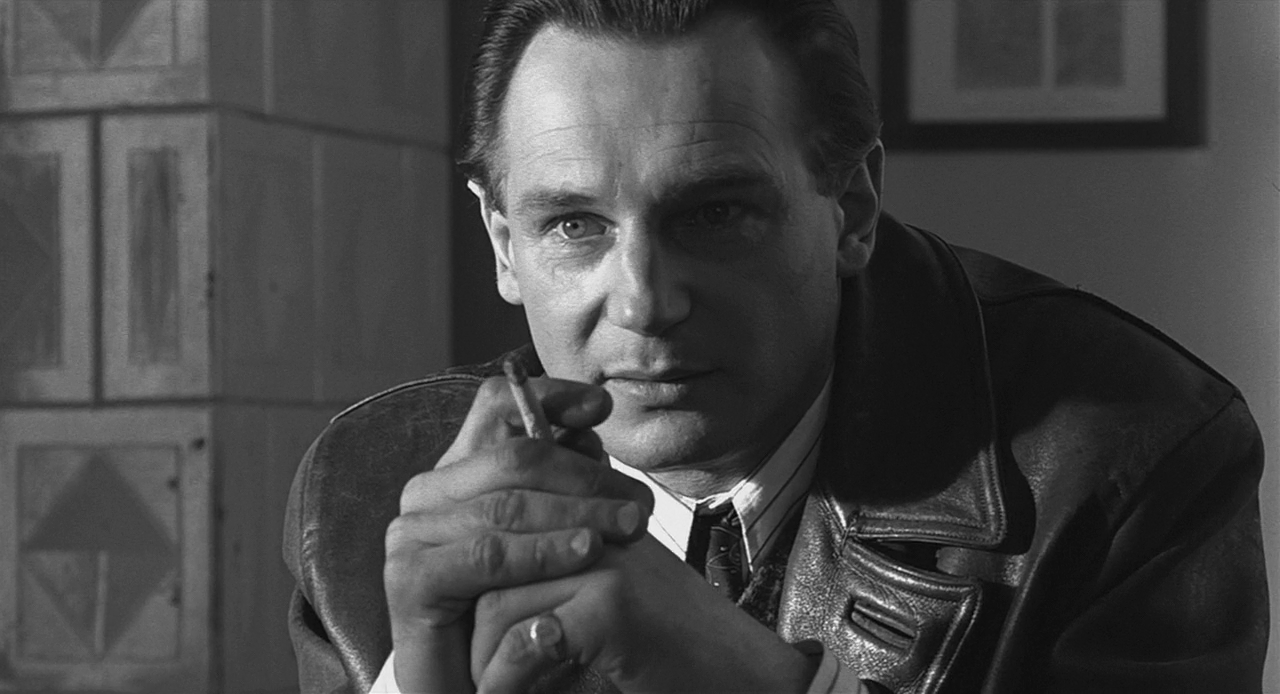
I've always liked the over-the-top dramatic lighting of the film noir style, and Spielberg seemed to be taking his cues from those aesthetics for much of Schindler's List. Here, he uses deep shadows to frame up the primary subjects so that there's no question as to what's important within the frame. The use of black and white film here adds to the ethos of the piece, and in my opinion gives weight to the seriousness of the subject matter.


David Fincher's films generally have very moody lighting. In these two shots from Se7en, again we see a low key resulting in strong shadows on one side of the subject's face. Fincher's movies seem to take place in a world where nothing else outside of the plot is happening, which I think helps keep the audience focused on the story. I believe lighting does a lot to help achieve that tone.


This screen grab from Pan's Labyrinth is beautiful, but it belies the ugliness that takes up much of the film. Here, the subject is looking up and toward the light, perhaps symbolic of her desire to escape from the circumstances of the plot.


Children of Men takes place in a dystopian future England where humanity is one generation away from total extinction, and the lighting and color in the film reflect that atmosphere. The exteriors look mostly naturalistic, but the sky is always dreary and wet and the greens of the countryside are lush like a jungle; like the proverbial wilderness waiting in the wings to encroach upon our cities once mankind is gone.


Finally, we have Bergman's Virgin Spring, a beautiful and powerfully moving film, albiet a very tragic and sad one. The characters are strongly lit and the shadows are often impenetrably deep, hinting at the darkness that lies in the hearts of man and at the heart of the story. In the lower screen cap, the lighting on the daughter is soft and white, making her seem innocent and cherubic. By contrast, her father has his face partially hidden in the shadows, suggesting that he knows of things that she does not that weigh heavily on his soul, and possibly foreshadowing the events of the film.


Saturday, February 4, 2012

#4: Reflection

So far this semester I've learned a good bit of practical, hands-on knowledge for working on an actual production set. I've picked up a number of terms that I hadn't heard before like "dead soldier" for an assembled stand sitting unused off set. The readings for this class have been very interesting and I'm really enjoying delving deeper into not only the technical aspects of the craft, but the psychology behind why certain visual concepts work in the way that that do. Most importantly, I've learned that if I'm the last one to get into the classroom, then I have to sit in one of the uncomfortable black plastic chairs.

I think the biggest challenge for has been simply maintaining focus when it comes to class and working on the set. While I'm very interested in the material, my brain just naturally moves in about 100 directions at once at any given time so it's very easy for me to get distracted. As a result, I often feel that I'm not quite on the same page as the rest of the group.

Also, I'm having some difficulty dealing with finding the time to work on shoot assignments since I have a very busy schedule that includes full-time classes, two different jobs on campus, and a good bit of freelance work outside of school. Just today, I was on campus from 8:00 A.M. until 9:00 P.M., and that's a fairly typical day for me.

My current schedule doesn't really leave any time for me to develop and work on my own projects, which is frustrating. I'm really looking forward to Spring Break, during which I will sleep late every day and hopefully manage to get some rest for the first time this semester.

While this may all read like a litany of complaints, I'm honestly quite happy to be a part of TCF and I feel lucky to be spending my time working within a field about which I am passionate and thoroughly enjoy.

Wednesday, February 1, 2012

#3: Goals

Currently, my primary goal as a filmmaker is to work in the industry and establish myself well enough that I can raise the capital to open a modestly-sized independent production house. This would give me the opportunity to work commercially on other people's projects while providing a support system and the equipment to develop my own films. Having the freedom to develop and produce my own projects has been a dream of mine for as long as I can remember, and opening a studio seems the most realistic and practical way to make that happen.

As far as this class is concerned, I think the main thing I'm hoping to accomplish is the learning of the ability to work well with others. I'm something of a hermit and I simply don't like being around other people for the most part. Film is, however, a hugely collaborative medium; so learning to play nice with others is an essential skill to be mastered.

Aside from that, I do feel fairly competent with the technical and artistic sides of filmmaking; but I believe that there's always more to learn so this class can only help. For every one thing I know how to do, I acknowledge that there are a thousand that I don't. Also, every person has their own individual take on filmmaking so I think there's a lot learn from taking the perspectives of others into consideration when developing one's own personal style. I hope to become a better filmmaker by broadening my horizons and learning how the guy to my left or the girl to my right might go about shooting a scene.

Wednesday, January 18, 2012

#2: Images That Inspire Me

I've gathered up a few images from a few artists that inspire me to make my own films. First up:

ANSEL ADAMS


I first noticed the work of Ansel Adams when I started getting into photography when I was younger. I remember being drawn to how simple and yet powerfully composed his photographs are. His stark black and white images and photos of the untamed American wilderness stand strong, like the proverbial moment frozen in time. Adams makes expert use of negative space in a way that gives his work a real sense of gravity and importance.

Compare the two images above. Notice how the amount of space occupied by the the landscape in the first photo is almost exactly the same as the space taken up by the sky and mountains in the second image? Adams used traditional thirds in many of his compositions. In the first, the sky is vast and expansive, making the tiny town below seem even smaller. In the second image, the field is seemingly endless and sprawling, dwarfing the tiny people who work it.

WALLY PFISTER

Wally Pfister is Chris Nolan's go-to cinematographer and has DP'd every one of Nolan's films since Memento. Like Ansel Adams, Pfister has a way of shooting that grants his subjects a real power and prominence. He manages to make everything that he puts in front of the camera look important and larger than life. Whether we're talking about the massive skylines of Gotham or the tiny spinning top in Inception, Pfister creates images that, to me, look the way a movie is supposed to look.

I've also noticed that Chris Nolan's films seem to lean toward desaturated hues and and strong contrast, which is a look that I happen to like. Less saturated colors on the screen provide the viewer with less visual information, forcing them to look into the image rather than just at it, resulting in increased emotional engagement.

Also, Batman is awesome.


The Prestige


Dark Knight


Inception


BLUE VELVET & MULHOLLAND DRIVE


David Lynch is one of my favorite filmmakers, in part because I think he might be genuinely insane. Blue Velvet and Mulholland Drive are two of my favorite films and they're both gorgeously shot.

Lynch portrays women in his films in the same way he portrays most of his characters: as over the top polarized caricatures of character types. The women in Lynch's movies bring to mind the leading ladies of the classic Hollywood era, but with a dark modern twist. They are often very feminine and dangerously sensual. Lips are blood red, the "bad girl's" hair is jet black, and the shadows are deep and dangerous.

Men get the same treatment from Lynch. In Blue Velvet, the evil Frank is as evil as they come. Clad in a black leather jacket and driving a black muscle car, he is sadistic, violent, and abusive, and seems to be enjoying every minute of misery that he inflicts upon others.

Both of these films rely heavily on the atmosphere of mystery and dread that Lynch evokes, and that atmosphere is achieved largely through his choice of visual styles.


Mulholland Dr.


Blue Velvet

COMIC & FANTASY ART

I'm a fan of comic book and fantasy art. I appreciate the limitations of the comic book format and have always been amazed by any artist who can compose an image that not only looks great, but can convey a character's personality, motivations, and emotions while also setting a scene and telling a story all in a single frame. Among my favorite artists are:

FRANK FRAZETTA


BORIS VALLEJO


FRANK MILLER


And Batman is still awesome.

Sunday, January 15, 2012

#1: 10 Pieces of Music That Inspire Me to Make My Own Films

I've always been intrigued by the power of music in film. The right song or score in the right place can take a scene from good to great. Certain melodies or chord progressions are so powerful that they can instantly evoke the memory of a scene or the emotion and tone of a film years after first experiencing it.

Whenever I hear music that moves me, I start dreaming of shots and scenes and colors that would do justice to the way a particular piece makes me feel. I think a lot of the reason I got into filmmaking in the first place was so that I would have a conduit through which to express the powerful emotions that music evokes within me.

Below are ten pieces of music (in no particular order) that inspire me to make my own films whenever I hear them.

1. Lux Aeterna by Clint Mansell - Requiem for a Dream

This is one of my favorite pieces of film music of all time. Whenever I hear it, I remember the intensity of watching Requiem for a Dream the first time. The piece has a lot of dynamics, moving from slow brooding sections that evoke a sense of sadness and loss to explosive crescendos that perfectly reflect the struggles with addiction and self destruction that lie at the heart of the film.


2. Roads by Portishead

This song feels somber and fragile to me. I would love to shoot a music video for it.


3. Theme from Robocop by Basil Poledouris

Paul Verhoeven's Robocop was one my favorite films as a kid. This theme kicks in after Peter Weller's character has become Robocop and he leaves the police station for the first time in a cop car. The theme swells as he drives alone through the streets of Detroit and it really makes you fell like Robocop has officially arrived and is ready to kick some ass.


4. O Children by Nick Cave

I'm not a big fan of the Harry Potter series, but I am a big fan of Nick Cave. This song was used to great effect in a scene in the first half of the last film in a scene where Harry and Hermione dance sadly together in a tent at a point in the film when it seems all hope is lost. This was the first piece of music used in any of the films that wasn't of the film score variety, which I find very clever given that this scene takes place in the "real world", outside the confines of Hogwarts.


5. Theme from 2012: Cyborg Apocalypse by Douglas Dillingham

I wrote this theme for my entry to the 2005 DVXUser.com Sc-Fi short film contest. You can watch the actual film below the theme song. In my opinion, the music is better than the movie...


6. Who Wants to Live Forever by Queen - Highlander

Highlander is another film I really liked as a kid. Swords and Sean Connery? Yes, please. This song by Queen was used in the film and the impassioned vocal performance of Freddy Mercury along with the orchestra strings and guitar really call upon the sadness inherent in the idea of immortality. If you could live forever, you'd have to watch everyone around you die again and again and again.


7. Pyramid Song by Radiohead

Another sad and evocative piece. The music video for this one is great, as well.


8. Ride of the Valkyries - Wagner - Apocalypse Now

A classic piece from a classic scene. I've always been fascinated with the war in Vietnam and there have been some great films made about it.


9. X-Men 1990's Cartoon Theme

This was one of my favorite cartoons from the 90's and the theme was 100% awesome.


10. Theme from Unsolved Mysteries by Michael Boyd and Gary Remal Malkin

Possibly the most ominous and frightening theme song ever. This one makes me want to start shooting a horror film.